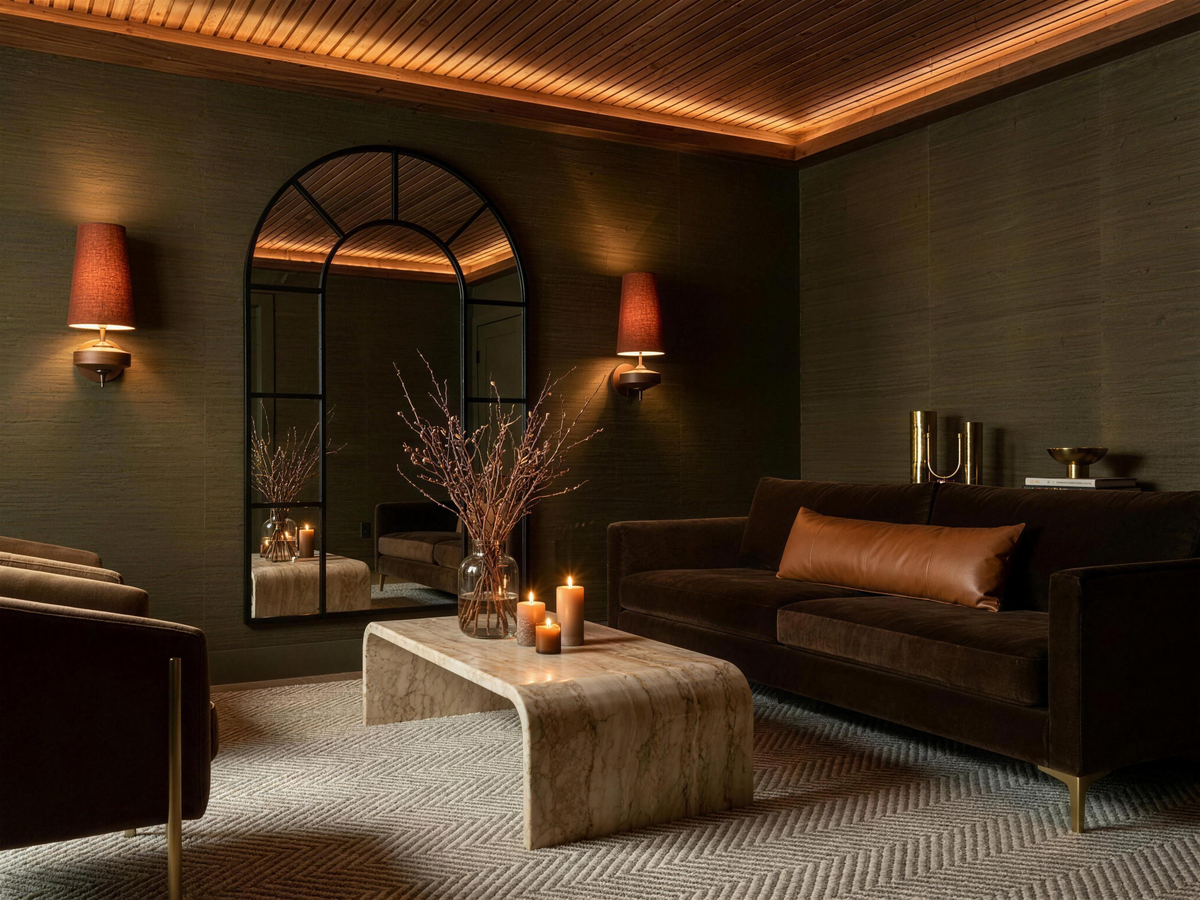
Signature material
Travertine
What it isA natural sedimentary stone with open pores and soft banding. No two pieces are alike.
Why we use itIts cream-to-beige tone and matte surface diffuse light gently and bring grounded, organic warmth, overhead or on a table.
CareDust with a soft, dry cloth. Wipe spills promptly and avoid abrasive pads or harsh chemicals, as natural stone is porous.

Signature material
Wood
What it isSolid timber and woven bamboo, mostly walnut and pale natural woods, each with its own grain and figure.
Why we use itWarm and tactile, it offsets the technical light source with a warm, tactile character and ages gracefully.
CareDust with a soft, dry cloth. Keep out of prolonged direct sun and damp; an occasional wood-safe wax keeps it nourished.

Signature material
Glass
What it isBlown and frosted glass, including milky opal globes and clear or smoked shades.
Why we use itOpal glass spreads light evenly for a soft, glare-free glow; clear and smoked glass give a warmer, more directional light.
CareWipe with a soft cloth and a little glass-safe cleaner. Support the shade by its fitting when cleaning.

Signature material
Marble
What it isNatural marble, a crystalline stone with flowing veining. Every piece is unique.
Why we use itA cool, polished counterpoint to warm light, with enough weight to anchor table and wall pieces.
CareDust with a soft, dry cloth and wipe spills quickly. Avoid acidic or abrasive cleaners, which can etch the surface.

Signature material
Textile
What it isWoven and pleated fabric shades in soft, natural tones.
Why we use itFabric warms and softens the light and adds a quiet texture; pleating gives a gentle rhythm of light and shadow.
CareDust gently or vacuum on low with a brush head. Spot-clean lightly and avoid soaking.

Signature material
Paper
What it isTraditional rice paper and parchment, formed into lantern shades.
Why we use itPaper glows with an exceptionally soft, even warmth and a calm, wabi-sabi character; natural fibers vary subtly in tone.
CareDust gently with a dry, soft brush. Keep dry, as paper is delicate and not washable.

Material
Iron
What it isPowder-coated iron, used for canopies, frames, arms and bases.
Why we use itStrong and stable, it holds shades precisely and takes a smooth matte finish in black, white or color.
CareWipe with a soft, dry or slightly damp cloth. Avoid abrasives that could mark the coating.

Material
Metal
What it isBrushed aluminum with occasional brass accents, used for housings, stems and caps.
Why we use itLight aluminum suits machined, minimal forms and helps draw heat away from the LED; brass adds a warm metallic detail.
CareWipe with a soft, dry cloth. Avoid abrasive polishes on brass, as a light patina is natural over time.

Material
Acrylic
What it isTechnical acrylic, used mainly as LED diffuser panels and some lightweight bodies.
Why we use itFrosted acrylic spreads LED light smoothly edge to edge for an even, modern glow, and is durable and shatter-resistant.
CareWipe with a soft, damp cloth and mild soap. Avoid alcohol or solvent cleaners, which can cloud the surface.

Material
Plastic
What it isMolded polymers, mainly polyethylene and PVC, with some ABS and polycarbonate, used for diffuser domes, shades and lightweight bodies.
Why we use itMolded in one piece, it holds large curved and domed shapes at a fraction of the weight of glass, which matters on a wall or ceiling. It diffuses LED light softly and will not shatter.
CareWipe with a soft, damp cloth and mild soap. Avoid alcohol, solvents and abrasive pads, which can scratch or dull the surface.

Material
Ceramic
What it isSlip-cast porcelain, fired and finished with a soft satin glaze, used for shades and shade details.
Why we use itIt holds fine cast detail such as pleating and fluting, and its slight translucency lets the shade glow softly rather than simply blocking the light.
CareDust with a soft, dry cloth and wipe with a barely damp one. Handle by the body rather than the rim, as fired ceramic chips if knocked.